


[Japan’s Voices No. 25] The 50th Anniversary of the Fukuda Doctrine and Its Growing Relevance in Today’s World
Takio Yamada (Executive Director, JIIA Center for Global Outreach)
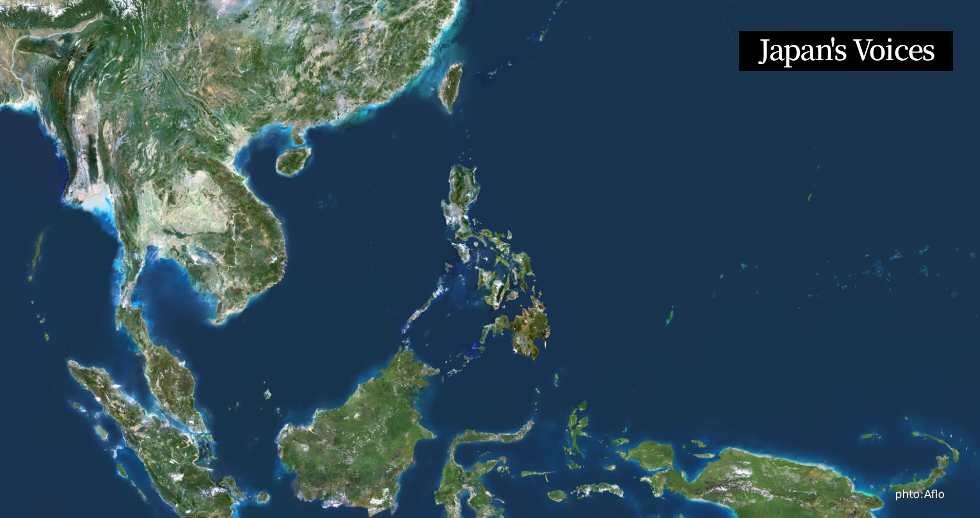

In August 1977, Japanese Prime Minister Takeo Fukuda embarked on a tour of six Southeast Asian countries: the five founding members of ASEAN – Malaysia, Indonesia, Singapore, Thailand, and the Philippines – and Burma (now Myanmar).
In Kuala Lumpur, the first stop on his tour, an ASEAN summit was underway. Taking advantage of this opportunity, Prime Minister Fukuda held the first Japan–ASEAN summit with the leaders of the five ASEAN member states. This was one of ASEAN’s first summit-level meetings with a partner from outside the region.
In Manila, the final stop on his tour, Prime Minister Fukuda delivered a historic policy address in which he articulated the diplomatic principles that would later become known as the “Fukuda Doctrine.” The doctrine was highly appreciated by ASEAN countries and has continued to serve as a key pillar of Japan–ASEAN relations for nearly half a century.
The year 2027 will mark the 50th anniversary of the Fukuda Doctrine. As we approach this important milestone, I would like to revisit the historical circumstances that gave rise to the doctrine and reflect on its relevance in today’s world.
What Is the Fukuda Doctrine?
The Fukuda Doctrine can be summarized in three fundamental principles.
First, Japan, as a nation committed to peace, rejects the role of a military power and is resolved to contribute to the peace and prosperity of Southeast Asia and the world community.
Second, Japan, as a true friend of the countries of Southeast Asia, will do its best to consolidate relationships of mutual confidence and trust based on “heart-to-heart” understanding with these countries.
Third, Japan, as an equal partner of ASEAN and its member countries, will cooperate positively in their efforts to strengthen their solidarity and resilience while seeking to foster relationships with the nations of Indochina, thus contributing to peace and prosperity throughout Southeast Asia.
Of these three principles, the second — the commitment to building relationships of mutual confidence and trust through “heart-to-heart” understanding — is undoubtedly the best known. However, I hope that by examining the historical circumstances surrounding the birth of the Fukuda Doctrine and its significance, readers will come to appreciate that the other two principles are no less important.
The Historical Background of the Fukuda Doctrine
Let us first examine the historical circumstances that led to the formulation of the Fukuda Doctrine.
1. Backlash Against Japan’s Aggressive Economic Expansion
One of the most frequently cited factors behind the Fukuda Doctrine was the strong anti-Japanese sentiment that surfaced during Prime Minister Kakuei Tanaka’s visit to Southeast Asia in January 1974, most notably in the large-scale riots in Jakarta and anti-Japanese demonstrations in Bangkok.
By that time, Japan had recovered from the devastation of its defeat in World War II and achieved remarkable economic growth. It was rapidly expanding its economic presence throughout Southeast Asia.
However, the sheer intensity of Japan’s economic expansion generated considerable resentment. In Thailand, for example, a sharply widening trade deficit with Japan fueled a boycott movement against Japanese products and growing anti-Japanese sentiment.
In resource-rich countries such as Indonesia and Malaysia, the situation was somewhat different. Because Japan imported large quantities of oil, timber, natural rubber, and other commodities, Japan itself tended to run trade deficits with these countries. Nevertheless, Japanese manufactured products were penetrating local markets on a massive scale, placing pressure on domestic industries. Concerns also arose over the distribution of benefits from the exploitation of natural resources. These factors contributed to mounting resentment toward Japan in these countries as well.
Equally important was criticism directed at Japanese businesspeople and other Japanese nationals operating in Southeast Asia for their insufficient understanding of the region’s diverse cultures and societies.
They were disparaged for failing to learn local languages, showing little interest in local customs and traditions, and inadequately communicating with their host societies. Such critiques were highlighted in a 1974 Time magazine article entitled “Japan: Rich and Unloved”.
Against this backdrop of mounting resentment toward its economic expansion, Japan needed to develop the soft power to overcome these negative perceptions.
It was in response to this challenge that the Fukuda Doctrine emphasized the importance of building relationships of mutual confidence and trust based on “heart-to-heart” understanding.
The phrase is said to have been proposed by Sakutaro Tanino, then Director of the Second Southeast Asia Division at Japan’s Ministry of Foreign Affairs, who later served as Japan’s Ambassador to China.
2. The End of the Vietnam War and US Withdrawal: Geopolitical Turmoil in Indochina
Another important historical factor was the geopolitical turmoil that followed the end of the Vietnam War in 1975 and the withdrawal of US forces from Indochina, which created a power vacuum in the region. The political landscape of the three Indochinese countries changed dramatically within a remarkably short period.
In April 1975, the Khmer Rouge seized power in Cambodia. Later that month, Saigon fell, bringing about the collapse of the South Vietnamese government. In December, a communist government was established in Laos.
Although it avoided a communist takeover, Thailand also experienced serious political instability. In 1976, US forces withdrew from the country, while political confrontation between left-wing and right-wing groups intensified. In October, the bloody events at Thammasat University were followed by a military coup.
Meanwhile, the ASEAN member states outside Indochina enjoyed somewhat greater political stability.
Nevertheless, the dramatic transformation of the geopolitical landscape in Indochina following the end of the Vietnam War posed a serious threat to the stability of Southeast Asia as a whole.
In response, Indonesia took the initiative in convening the first ASEAN Summit in Bali in February 1976, with the participation of the leaders of all five ASEAN member states: Indonesia, Singapore, Malaysia, Thailand, and the Philippines.
At this historic summit, ASEAN adopted the Declaration of ASEAN Concord (Bali Concord I), emphasizing the importance of strengthening the resilience of individual member states and the region as a whole. The summit also saw the signing of the Treaty of Amity and Cooperation in Southeast Asia (TAC), often described as a constitutional foundation of ASEAN.
The term “resilience” appeared repeatedly in Prime Minister Fukuda’s historic speech. This presumably reflected the emphasis placed on resilience in the Declaration of ASEAN Concord adopted the previous year. Yet strengthening ASEAN’s own resilience and developing relationships of mutual trust with the Indochinese countries were formidable tasks that ASEAN could hardly accomplish on its own, particularly amid the geopolitical upheaval following the end of the Vietnam War and the withdrawal of US forces.
Accordingly, ASEAN looked toward closer cooperation with Japan, which had recovered from the devastation of World War II, emerged as the world’s second-largest economy, and begun to assume a more proactive political role in Asia.
The third principle of the Fukuda Doctrine represented Japan’s affirmative response to ASEAN’s expectations. Japan expressed its commitment to supporting ASEAN’s own efforts to strengthen solidarity and resilience at both the regional and national levels, a message warmly welcomed by ASEAN member states.
3. Japan’s Postwar Commitment to Peace
A final historical factor that should not be overlooked is Japan’s wartime legacy in Southeast Asia.
Much of Southeast Asia had fallen under Japanese occupation during World War II as part of Japan’s vision of a “Greater East Asia Co-Prosperity Sphere.”
Despite more than three decades having passed since the end of the war and Japan’s postwar commitment to peace having become increasingly recognized, painful memories of Japanese military rule continued to linger.
For Japan to be accepted by ASEAN as an important partner in the challenging tasks of strengthening regional resilience and building trust with the countries of Indochina, it was essential to overcome the negative perceptions rooted in this historical experience.
It was against this background that the first principle of the Fukuda Doctrine declared: “Japan, as a nation committed to peace, rejects the role of a military power, and on that basis is resolved to contribute to the peace and prosperity of Southeast Asia, and of the world community.”
Interestingly, it is said that Prime Minister Fukuda himself decided to add this principle at a relatively advanced stage in drafting his speech, conveying his instructions to the Ministry of Foreign Affairs through his senior aide Hisashi Owada, who later became Vice-Minister for Foreign Affairs.
The prime minister’s declaration of resolve in this historic address can be regarded as having laid an important foundation for the constructive partnership that subsequently developed between Japan and ASEAN.
The Contemporary Relevance of the Fukuda Doctrine
Let us now turn to the contemporary relevance of the Fukuda Doctrine.
Nearly half a century after its proclamation, the doctrine has by no means lost its significance as a foundation of Japan–ASEAN relations. On the contrary, as the strategic environment surrounding the region has become increasingly complex in recent years, the relevance of the Fukuda Doctrine appears to be growing.
1. Responding to Economic Threats: The Importance of Trust and Resilience
A comparison of the regional environment in 1977 with that of today reveals several considerable overlaps.
One is that ASEAN countries in 1977 faced perceived threats arising from Japan’s rapid economic expansion. The resilience of individual countries and the region as a whole had become a major concern, creating circumstances that bear certain similarities to what we now call “economic security risks”.
Although the General Agreement on Tariffs and Trade (GATT), the predecessor of the World Trade Organization (WTO), was already in place, the scope of its rules and protections remained limited.
In this respect, the situation in 1977 shows strong parallels to the challenges we face today.
Various forms of economic coercion are currently threatening the resilience of supply chains, the effectiveness of the WTO and other aspects of the rules-based international order is being called into question, and the importance of economic security is increasing.
Both in 1977 and today, relationships of mutual trust among countries seeking cooperation become all the more important when the rules-based international order does not function adequately.
One reason the Fukuda Doctrine’s commitment to building relationships of mutual trust with ASEAN through “heart-to-heart” understanding was so highly regarded at the time was precisely due to the value of trust under such challenging circumstances.
ASEAN countries and many other nations across the Indo-Pacific are now once again facing threats arising from economic coercion in numerous forms and strategic challenges.
In this context, expectations of Japan as a trustworthy partner have climbed considerably. Japan’s recent regional initiatives, including its “Updated Free and Open Indo-Pacific (FOIP)” vision, the Asia Zero Emission Community (AZEC), and POWERR Asia, have also fostered substantial hopes.
Being regarded as a most trusted partner by countries throughout the region is among the greatest assets of Japanese diplomacy.
The 50th anniversary of the Fukuda Doctrine should therefore provide an opportunity for Japan to reaffirm, at the highest political level, its determination to remain a trusted
counterpart to ASEAN, bound by genuine “heart-to-heart” understanding.
Japan should also reaffirm that trust constitutes an essential basis for resilience and that it is committed to working with countries throughout the region, based on mutual confidence and trust, to build a peaceful and prosperous future.
2. Changes in the Geopolitical Environment: Upholding Japan’s Commitment to Peace
Another correspondence between 1977 and today is that profound changes in the geopolitical environment have had major implications for regional stability, creating expectations of a greater role for Japan. Indeed, given the strategic circumstances prevailing in both periods, heightening expectations of Japan may be seen as a natural consequence of the changing regional environment.
Even so, there are fundamental differences between the two periods.
In 1977, the Cold War between the United States and the Soviet Union was still in full swing, with Europe serving as the principal frontline between the Eastern and Western blocs. By contrast, the key battleground for today’s strategic competition between the United States and China lies in East Asia and, consequently, Japan’s currently envisioned role differs significantly from that of 1977.
At that time, Japan’s part in turbulent Indochina following the end of the Vietnam War and the withdrawal of US forces was largely confined to political and economic contributions. Today’s geopolitical circumstances, however, require Japan to assume a much greater role in maintaining peace and stability in East Asia.
To address an increasingly complex geopolitical environment, marked by, among other developments, shifts in the US military posture under the current administration while maintaining the credibility and effectiveness of the deterrence provided by the Japan–US security alliance, Japan needs to review its national security and defense strategies, bolster its defense capabilities, and deepen security and defense cooperation with regional partners, including ASEAN member states, Australia, and India.
Such security and defense measures are being undertaken to the extent necessary in response to changes in the region’s geopolitical environment but Japan’s fundamental commitment to peace, as articulated in the Fukuda Doctrine, remains unchanged.
On the doctrine’s 50th anniversary in 2027, Japan should reaffirm its unwavering commitment to peace at the highest political level.
3. The Emergence of an Era of Equal Partnership Between Japan and ASEAN
Finally, I would like to highlight the dramatic narrowing of the economic gap between Japan and ASEAN over the past half-century.
In 1977, Japan’s nominal GDP was approximately seven times larger than the combined GDP of ASEAN’s five member states.
ASEAN has since expanded to 11 member states, whose combined GDP now exceeds US$4 trillion, slightly surpassing that of Japan.
Of course, Japan’s GDP per capita remains considerably higher than that of most ASEAN countries but, in terms of overall economic size, we have already entered an era in which ASEAN has collectively overtaken Japan.
Given the differences in economic growth rates between Japan and ASEAN, this gap is likely to widen further in the years ahead. This is an economic reality we must recognize.
The Fukuda Doctrine proclaimed the principle of an “equal partnership” between Japan and ASEAN, emphasizing respect for ASEAN’s own initiatives and efforts.
In 1977, this principle was presumably understood primarily as a message expressing Japan’s respect for ASEAN’s autonomy and agency.
Nearly half a century later, though, Japan–ASEAN relations are entering an era of equal partnership in a much more substantive sense.
In this respect, the Fukuda Doctrine demonstrated remarkable foresight.
The evolution of Japan–ASEAN economic relations also illustrates this transformation.
For many years, official development assistance (ODA) occupied a central place in Japan’s economic cooperation with Southeast Asian countries. Today, however, the principal areas of economic engagement have shifted beyond ODA toward trade, investment, technology transfer, and cooperation in such areas as supply chains, green transformation (GX), and digital transformation (DX).
Similarly, in the realm of security, Southeast Asian countries will inevitably assume ever more important roles of their own.
The time has therefore come for Japan and ASEAN to explore new forms of security cooperation, including information sharing and cooperation in defense equipment and technology.
The 50th anniversary of the Fukuda Doctrine should provide an opportunity to declare that Japan and ASEAN have entered a new era of genuinely equal partnership.
Looking ahead, both sides should commit themselves to building a new relationship based on mutual respect, mutual assistance, and mutual benefit.
Such a partnership would carry forward the enduring spirit of the Fukuda Doctrine while adapting it to the realities and opportunities of a new era.
*The author concurrently serves as Japan’s Ambassador for AZEC.

Takio Yamada (Executive Director, Center for Global Outreach, The Japan Institute of International Affairs)
Takio Yamada is the Ambassador for the Promotion of the Asia Zero Emission Community (AZEC), Special Assistant to the Foreign Minister of Japan. Former Ambassador to Vietnam. Executive Director, Center for Global Outreach, The Japan Institute of International Affairs.