


APEC Project Workshop “The Effects of Structural Reform on Digitalization, Productivity and Labor Migration on APEC Economies in the Age of Ageing Population”
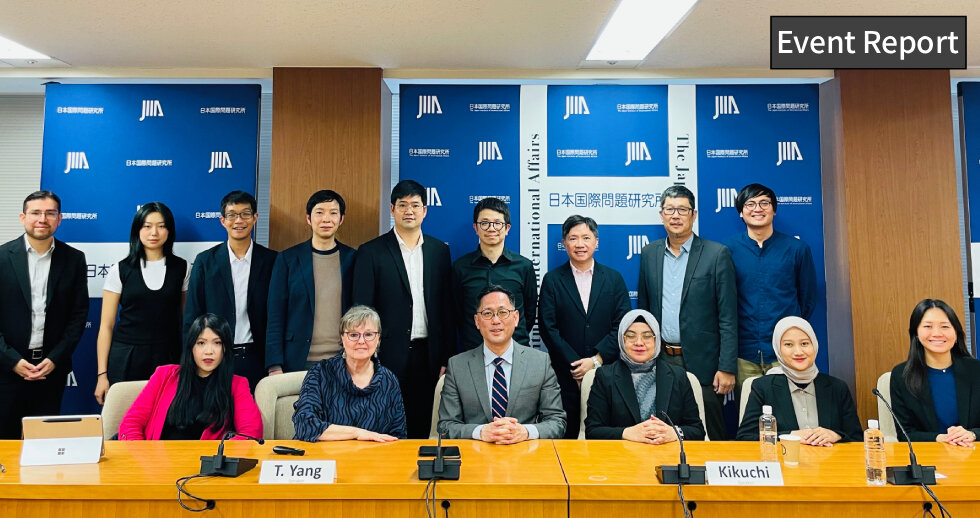

APEC Project Workshop (JIIA Conference Room, February 26–27, 2026):
An APEC project workshop titled “The Effects of Structural Reform on Digitalization, Productivity and Labor Migration on APEC Economies in the Age of Ageing Population” (Project Overseer: Tomoo Kikuchi, Professor, Graduate School of Asia-Pacific Studies, Waseda University) was held in person at The Japan Institute of International Affairs on February 26–27, 2026. Approximately 30 participants attended, including experts and policymakers from APEC economies, as well as representatives from ASCJ and ABAC Japan.
The workshop was organized in response to the growing number of APEC economies facing population decline and aging. As structural reform aimed at achieving productivity growth and sustainable economic development—through AI-driven digitalization and labor mobility—has become a priority, the workshop examined policy challenges related to promoting digitalization, human capital development, and facilitating labor mobility, while also sharing best practices across economies.
On Day 1, opening remarks were delivered by Tomoyuki Yoshida, followed by opening remarks by Shige Watanabe, Ambassador in charge of Economic Diplomacy at the Ministry of Foreign Affairs. A keynote address by Reiko Hayashi, Director-General of the National Institute of Population and Social Security Research, highlighted the structural impacts of demographic change on the economy and society. Subsequent sessions included a presentation on Japan’s innovation value chains and CGE-based simulation analyses, which quantitatively examined the effects of digitalization and labor mobility on productivity. Case studies from Malaysia, Thailand, and Korea further provided insights into labor market adjustments and human resource policies, with discussions emphasizing the interaction between digital transformation and skills development.
On Day 2, a special session focused on women’s labor force participation, skills development, and technological adaptation, highlighting challenges in building inclusive labor markets. Additional case studies from the United States, Canada, and Chinese Taipei enabled comparative discussions on immigration policies, skills development, and labor market institutions. In the final session, policy recommendations for APEC cooperation were discussed, and participants shared the view that digitalization, human capital development, and labor mobility must be advanced in an integrated manner to effectively respond to demographic changes.
Overall, the workshop reaffirmed the importance of comprehensive policy responses that combine technological innovation with institutional reform to address labor constraints arising from population aging. It also facilitated the sharing of empirical and policy insights based on country experiences, thereby contributing to shaping directions for regional cooperation within APEC. The final output of the project is expected to be published as an APEC Report.