


The 6th Tokyo Global Dialogue Session 4: Artificial Intelligence and International Peace and Security

Session 4: Artificial Intelligence and International Peace and Security
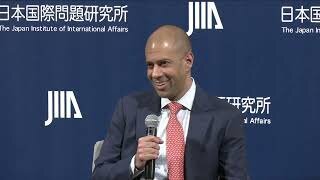
This session discussed the security challenges associated with the rapid development of AI. The analysis concluded that the rapid development of emerging technologies between the US and the USSR (and later Russia) has rarely upset the strategic equilibrium on its own, even if it has created asymmetries, and that the spread of AI will not result in enduring asymmetrical dominance over the long term. It was also stated, however, that there is a risk that significant advances in targeting and ISR could widen the gap between the “haves” and the “have-nots,” worsening the international security environment.
In addition, the need to maintain human involvement (human-in-the-loop or human control) in the military use of AI, particularly in the operation of nuclear weapons, was recognized, and the panelists agreed that, while maximizing the potential of AI, monitoring and control to ensure the security of human beings should be a priority. In particular, it was noted that maintaining human oversight of the use of nuclear weapons is a priority, and that an international agreement is being formed in this regard. Discussions focusing on human oversight are becoming increasingly important in bilateral and multilateral discussions on AI, and it was emphasized that efforts are needed to ensure the protection of citizens.
In the strategic sphere, it was noted that AI could be a source of opportunity, and that it could improve precision targeting on the battlefield, as demonstrated by the use of AI by the Ukrainian military. The potential of AI for sustainable development was also recognized, and it was acknowledged that international forums are essential to maximizing opportunities.
It was recognized that UN member states other than the major powers are not well versed in the use of AI and other emerging technologies, leading them to perceive more risks than opportunities in the development of such technologies, and that a multilateral and inclusive forum is essential for sharing different perspectives on AI. It was pointed out that joint governance of AI is still in the formative stage, and that future multilateral frameworks should be as inclusive as possible to fairly and effectively address AI issues. In addition, the importance of maintaining a humble and flexible attitude in the face of rapidly evolving technology and recognizing that there are many unpredictable aspects of it was emphasized.